Distracted by the noticeboard outside a Unitarian Chapel, Muriel shuffles her walking-frame closer. In a few moments, a gathering advertised as The Death Café, will take place inside. Somehow, it’s a sign. The shock of her daughter’s death has diminished her. Daughters are supposed to bury their mothers, not the other way round, unless, of course, you’re Joan Didion … and even then. Of course, she’s familiar with the stages of grief, and is galloping through them like a wild stallion. Denial hit long before her daughter actually ceased to be. Grief is indivisible after all. Dividing grief into stages is a western obsession her daughter had told her. ‘Another example of a colonial mind-set … labelling, categorising.’
Grief is not a pebble inside a jar to be taken out and put inside a larger jar, then, a few months later, put inside an even larger jar, until it’s comparatively smaller, as a bereavement circle leader had suggested. Even if one’s perspective changes day to day, that’s nothing to do with pebbles in jars. Grief is constant, intense stress. You’ll go mad if you can’t relieve the pressure: petty hatred of people going about their carefree daily lives, having a laugh, making inane remarks, ‘She’s in a better place,’ ‘At least she’s no longer in pain,’ or the random acquaintance competing for the title of chief mourner.
Amongst her daughter’s writings was a memoir she was still working on two weeks before her death,
‘As a child, even until my 40s, hell, even now, I kicked back against what felt I was wrong, unhealthy, unjust – and felt it was received with disdain and I was naughty and therefore bad. Many of these feelings of injustice, even disgust, I could not articulate. However, I just knew something was not OK. This kick back was towards family, white and middle class friends, teachers at school, work ‘colleagues’ and most even to myself as internalised shame. As an adult in their 50s, red flags wave everywhere, especially on social media. Things other people find cute or pleasing grind my gears, not because I am a ‘bitch’ (I am a bitch), but because they contribute to erasure, dilution, white supremacy and even occupation. I see BPOCs doing it often too.
When studying herbal medicine, it felt alien and unsafe in the form taught at university, within my classroom setting, the teachers, students (one who said “go back to where you come from if you don’t like it here,” but loved doing partner work with me to get good grades), the approach to learning, curriculum content building and time-table. Nothing was contextualised in terms of the legacy of trauma, theft and colonialism.’[i]
Here comes guilt, a visceral ache specific to her relationship with her daughter. The IDF and the GPO, even John Lewis and Marks and Spencer had combined to pile pressure on the two of them while her daughter was dying. The Royal Mail disrupted the handwritten correspondence they’d started after the deadly diagnosis, when they’d thought she had another year or two. After the first round of chemo, Muriel had returned home, out of London. Her daughter wrote by hand, in laboured, spindly handwriting, nothing like her normal hand, distinctive as a fingerprint. Twice, on consecutive weeks, tracked envelopes, containing spontaneous, free writing about their feelings, how her daughter wanted to be memorialised, her musings on her last wishes, disappeared into the maw of the Royal Mail, on one occasion arriving soaked in rainwater and pulverised. On another occasion, the envelope was torn open and completely emptied of contents.
Society was crumbling at the same time as her daughter’s vital organs were failing. When the once-mighty Royal Mail cannot be relied upon to deliver a personal letter, we can no longer rely on rights and norms, the rule of law, national treasures to function. How do you complain to the Royal Mail? To make a claim for a refund if a tracked item is not delivered, you must do it on line, a time-consuming process that entails a neat Catch-22. You have to apply within 10 days. Her tortured letters took more than 10 days, one of them a month, before boomeranging back onto Muriel’s doormat via the ‘Return to Sender’ system. Ergo, she was out of time.
Dear Royal Mail Complaints Team, I’m disappointed and outraged by the negligence with which Royal Mail has handled my mail on two consecutive weeks, failing to delivery a special delivery item and mutilating another. Losing a personal, private notebook that was enclosed in the mutilated letter caused incalculable distress to myself and my daughter, receiving end-of-life care for breast cancer. My letters are a weekly support for her at this terrible time for both of us …
A (quote) nice (unquote) man, tall, full head of hair, stylishly casual in a button-down sports shirt, steps up to greet her as she moves, shakily, as if sliding on ice, into the vast coolness of the chapel with its gloriously gaudy, stained glass and vaulted ceiling. Oh no, Mister, the postal service wasn’t set up so you and I could send each other a letter, she wanted to tell him, it was part of the infrastructure necessary for the development of capitalism. The democratic postal service was an inadvertent by-product. For a relatively small sum of money, anybody in the country, regardless of status, could send a letter to another person regardless of who they were.
Her daughter’s death has forced her to re-evaluate events that took place over seventy years ago, decades before her daughter’s birth. Family history intrudes into her consciousness in new ways. A vivacious, peroxide-haired aunt, her mother’s sister, chain-smoking Topsy (real name Violet) Townsend, maker of fashionable hats in Auckland, Aoetearoa (New Zealand), suddenly became ill. The telephone rang in the middle of the night in her family’s government house (kiwi terminology for social housing). Her 12 year-old self was terrified by her parents’ sombre tones, heightening her overwhelming fear of death. Later, when her maternal grandmother came to visit, she’d listened, invisible, as the adults talked about Topsy’s horrible end. Her grandmother, called Pansy, although her actual name was also Violet, had nursed Topsy for the few months that she survived after her diagnosis. Topsy had became emaciated and confused, her belly swollen and her limbs like sticks.
Her grandmother had lifted Topsy, bodily, in and out of the bath without any help even though she was an old woman. She’d changed her first-born’s clothes, tried to get her to eat and drink. At the hospital bedside days before her death, Topsy married the gay man with whom she’d lived, serving as each other’s ‘beards’.
Her aunt’s death was impactful, even though she’d only gleaned the import of it from furtive eavesdropping. When she’d started primary school, aged 5, Topsy had given her a beautiful dress to wear on her first day, but her mother had said it was too pretentious and expensive for school. Other children would think she was ‘putting on airs,’ if she wore it to school, her mother said. The dress was stowed away in the airing cupboard, never worn. In young Muriel’s mind, Topsy was cast as subversive and exciting, breaking the stultifying grip of perceived conventions that a 12 year-old child can only dimly understand.
Now, the ‘nice,’ tall man is taking her by the elbow, guiding her across ancient flagstones to where a group of people are sitting around white Formica tables that have been pushed together. Further off, others hover by a tea urn, collecting small cakes on pretty china plates, cakes and plates donated by Friends of the Chapel, according to her guide. Two nervous facilitators try to get everyone to sit down. Two youngish men, after filling their plates, are leaving a trail of crumbs as they saunter over, scraping their chairs on the exposed flagstones, one of them staring fixedly at his phone all the while. The other, with thinning hair and a strange Chaplinesque face, fiddles with the clasp of a designer rucksack with one hand while biting the nails of the fingers of his other hand. ‘Poor thing,’ she thinks, ‘he must have lost someone very close.’
The fellow with the phone places it on a collapsible tripod gizmo and tunes in a pair of wireless headpieces. Fishing in the commodious pockets of a long, black overcoat, although it is a hot day and he is pinkly sweating, he produces a packet of tobacco and a cigarette-making machine and proceeds to make one neatly rolled cigarette after another. Although she’d given up smoking over 30 years earlier, the craving suddenly returns with a vengeance. He too must be mourning somebody close, she thinks. Poor thing!
Her daughter’s face had become emaciated like the starving children of Gaza, her limbs like sticks, her belly distended, her feet and legs jumbo-sized. So painful was every part of her body, the hospice staff winced when they had to touch her and hear her involuntary screams. When she was settled for the night, hiccups would begin. Not like normal hiccups. A rasping intake of breath, like whooping cough, followed by a peculiar high-pitched, whistling, out breath.
Only a few weeks before her death, Muriel had been with her daughter to see the oncologist at the hospital near Euston. ‘You’re still here?’ he said, gaily. ‘You’re supposed to be dead.’
‘Another joker,’ she said.
‘You’ve done so well,’ he said, ‘our longest living outlier.’ Outlier is what they call someone who outlives their prognosis. ‘I’m sorry, but we’ve come to the end of the line, there are no treatments left. We’ve tried everything. Nothing is working. In any case, your body can’t take any more.’
‘I’ll go on a trial,’ she said.
‘You’re not eligible. You have tumours everywhere.’
‘But they’re not all active,’ she said.
‘That makes no difference.’
Her daughter’s theory was that you have to be heartless and inhumane to be an oncologist. To sit there, day after day, telling people that they’re going to die soonish. And still she lived on, squelching around in a pair of fleece-lined crocs, her legs and feet horribly swollen. Nobody would stand up for her on the bus. She would stand, sometimes calmly telling fellow passengers, ‘I’ve got tumours in my spine, and you are asking me to stand? See how swollen my belly is? I’m not pregnant, I’m dying.’
Why did she have to keep reminding us?
‘ I’m dying, mum,’ she’d say, frequently.
‘I know, I know.’
A facilitor explains the rules. We are not here to expound our theories about life, death and the universe, we’re here to listen to each other respectfully and with compassion. ‘My colleague and I will guide you through the process. We use egg-timers to ensure that each participant has an equal chance to speak. But there’s no pressure to speak at all and when the conch is passed to you, you can choose to pass it on. Turn over the egg timer when you’re ready to speak. Or, if you wish, you may use your few minutes to sit in respectful silence, thinking about your loved one.’
Muriel doesn’t know whether she’ll have the strength to speak. If she does, will she be able to stop?
A man is talking. His nails are bitten to the quick and his fingers double-jointed. His thinning hair is combed over and he has a Hitler moustache. His eyes, ringed with eyeliner, are like a budgerigar’s. The combed over strands of hair resemble the linear markings across the bird’s head. When he smiles, he looks strangely like Charlie Chaplin in The Great Dictator. His uptight emanations as he fiddles with the straps of his designer man-bag, are hypnotic. Despite his foetal posture and jittery demeanour, he’s first to speak. ‘The date of our death is foretold when we’re born. One individual death is the equivalent of multiple deaths. All the hysterical talk we are hearing at present about genocide and mass killing is redundant. There will always be wars between the strong and the weak. It is nature’s way of keeping down the population. We have to take emotion out of the equation.’
His clipped, posh tone continues after the egg timer empties, so he turns it over again and his nasal little voice resumes. The facilitator to my left turns a panicked face towards a woman, like Muriel, also in her eighties. ‘Penelope, would you like to say something about your experience? Tell us why you’ve come along today.’
‘I’ve enjoyed coming to the chanting group, so I thought I’d try this group,’ Penelope says. ‘It sounded interesting and gave me a framework to think about my situation. I’ve been living in the same house for 50 years. I’ve collected many beautiful objects and knick-knacks that have sentimental value. My late husband, who passed away twenty years ago, was a musician. My attic is full of boxes of scores, all marked up with his musical notations. I can’t bear to throw things away, but I know I need to downsize. My children have families of their own, they need the space more than I do. I’m going to move into a lovely space where the late, great editor, whose name escapes me, lived. Diana … There’s a lovely garden and library …
Trigger warning: Muriel remembers something her daughter had written in a letter that had evaded the Royal Mail’s censorship-by-non-delivery … A writing exercise set by a kindly middle-class tutor, volunteering as part of a therapeutic programme for Stage Four cancer patients, ‘When you step into your garden, what do you see?’ To which her daughter had angrily responded, ‘What if you don’t have a garden? What if you’re living in a tower block, what if you’re in prison, what if you can’t take a step? What if you’re blind?”
Penelope is saying, ‘So much of our identity is embodied in material things. I’ve been thinking a lot about this a lot lately. Who will value these objects after I’m gone? Who will love them?’
Muriel’s daughter had accumulated a significant amount of stuff, amazing concoctions arrayed on shelves, flowers that had been dried in a dehumidifier, machines to laminate drawings, theses, essays, many handwritten. Boxes of materials for quilting, momentos of friends who’d gone before, pieces of jewellery, dozens of pairs of shoes and slippers, exquisite jackets and dresses that no longer fitted when her stomach and feet became swollen.
Next up, the crowd-pleaser. ‘That’s so interesting, I’m glad you’ve been able to talk about how you feel.’
Now the cigarette-roller is in possession of the egg-timer. He rolls a couple more fags, as the sand trickles away, then says, dismissively, ‘Everyone has a pre-ordained date when they’re going to die, so why worry? It’s no biggie. When your number comes up, that’s it. Take emotion out of the equation. There’s nothing we can do, so just enjoy your life day to day.’ Apart from that, he doesn’t have anything to say though he’s timed out twice-over, keeping everyone’s attention on what he’s doing with his phone and the obsessive cigarette rolling.
The crowd-pleaser speaks, ‘That’s so deep, Nicollo. My sister has been giving my mother and me a terrible time. She’s been going to all the Palestine demonstrations, every week for two years. We just don’t know what to do with her. She get’s so upset about what’s going on in Gaza. I agree with you so, so much, we have to learn to live with death, even when it’s on a mass scale. These things happen from time to time. It’s human nature.’
In the moment, Muriel responds rationally and calmly, recalling the wisdom of a child, her eight year-old great-grand-daughter, who’d asked why it was taking so long for her grandmother to be buried? ‘There’s a queue,’ her responsible adults replied. ‘ Ah, of course,’ the kid said, experiencing a light bulb moment. ‘I hadn’t thought of that. Millions and millions of people die every minute, every second. And they all have to be buried!’
Muriel turns over her egg-timer and speaks calmly, ‘My personal anger and grief is compounded by the calculated genocide being inflicted on Palestinians.’ Turning to the crowd-pleaser she says, ‘You should be proud of your sister for going on the demos. That shows she has empathy with others, has the imagination to feel what they feel and wants to do something, to be with others who care, to show the people being massacred that it’s not happening in her name.’
Even though Muriel’s egg-timer is still emptying, the nail-biter cuts in, ‘Millions of deaths happen all the time, so there’s no point in getting obsessed with numbers. Anger is a personality flaw,’ he opined. ‘Anything that happened yesterday is irrelevant. Live in the now. Be happy.’
The egg-timer has depleted and still she hasn’t told them how the obscenely wealthy woman who lived next-door to her daughter, callously pursued the felling of a tree in her daughter’s yard and was supported by the social housing landlord, over and above her daughter who’d received the certificate from her GP which meant she officially had six months to live; how the landlord was obliged to put her in the category of vulnerable, but a whole campaign had to be waged to get them to do it. Instead they harassed her continually about the fucking tree.
Her rage intensifies as she thinks of the Marks and Spencer security guy who chased her daughter down the road, insisting on looking in her empty bag because she’d left the store without buying something. The sight of the M&S prawn sandwiches had made her nauseous. He’d tried to wrench the bag from her grip. She refused to let go and fought back. The story was reported in The Camden New Journal … ‘Cancer gran attacked by security guard … ’
John Lewis refused to install a new refrigerator at her daughter’s flat because they’d only sent one person who couldn’t manage the stairs on his own. She needed a fridge to chill her chemo, painkillers and steroids. John Lewis, never knowingly under-sold, took money from her bank without delivering the goods. It took weeks to sort, despite Muriel’s pleas on her daughter’s behalf.
Returning to the present, she puts her hand inside the pocket of her jacket where her fingers encounter a foil packet containing shrooms that her daughter asked her to administer when the pain became unbearable. They’d left it too late. At the end, her daughter was receiving sustenance through a tube, unable to swallow.
‘May I exchange a small packet of magic shrooms,’ she whispers to the fellow who advised her to live in the now and be happy, ‘for one of your beautifully-made cigarettes?’
[i] Extract from Radical Herbal by Claudia Manchanda (publication pending)
Gillian Tett’s “The open-source war”, (Life & Arts, July 23) yields fascinating insights into the “tech-savvy” Ukrainian digital war against Russia’s brutal, top-down invasion. Tech engineer, Roman Perimov, chillingly declares, “I am confident we will win the war. Israel is the model,” echoing similar pronouncements by Volodymyr Zelenskyy (website of The President of Ukraine, 5th April, 2022). This relies on a false analogy; Israel is the perpetrator of siege, invasion and attack, not their victim.
How can Israel be the model, an occupying power, wielding unimaginable, asymmetrical force against unarmed civilians with apparent impunity? Israeli arms suppliers like UK-based Instro-Elbit boast that their tech kit is “battle-tested” on Palestinians. Facial recognition/racial profiling software entrenches the relentless military occupation of the West Bank, targeting 100,000 Palestinians forced to cross checkpoints every day.
Perhaps an exercise in joining the dots between articles published in your own paper might help. Ban Ki-moon: “US should back a new approach to the Israeli-Palestinian conflict”, (29 June, 2021) writes “the conflict is between a powerful state which controls all aspects of life and people who are under occupation.” Mehul Srivastava’s “How Israel used NSO spyware as diplomatic calling card” (July 2021) references NSO’s Pegasus software in “a role that has come into focus after this weekend’s revelation by a consortium of newspapers that it had been traced to the cell phones of 37 journalists, lawyers and political activists.” Israel’s spyware infected the phone of Jamal Khashoggi’s fiancée Hatice Cengiz and was used against Thailand’s pro-democracy movement. As Srivastava observes, the sale of lethal software to other oppressive regimes is “the holy cow of Israel’s economy.”
Palestine Solidarity Campaign branches have organised a special International Women’s Day online event, featuring fantastic Palestinian speakers and solidarity campaigners. There will be a Q&A session, and other speakers may be added nearer the date. The event is being shared widely on social media and creating a buzz around the topic that has been enhanced by the Amnesty Report dubbing the Israeli regime as an apartheid state, something that campaigners have long been pointing out. To increase public recognition of a reality that has been obvious to many for decades, B-tselem, a respected Israeli human rights organisation agrees with Amnesty and so does Human Rights Watch who have both produced their own reports.
The speaker lineup is:
Dr Nada Elia, Palestinian Feminist Collective, scholar-activist in American Cultural Studies at Western Washington University, writer, and grassroots organiser, currently completing a book on Palestinian Diaspora activism
Sorcha Thomson, PSC Youth and Student Committee
A speaker from the Sheffield Palestine Women’s Scholarship Fund, a project enabling women students to access further education in Gaza
Dr Jennifer Mogannam, Palestinian Feminist Collective, Postdoctoral Fellow, Departments of Anthropology and Gender, Sexuality, & Women’s Studies, university of California, Davis http://www.jennifermorgannam.com
Watch this space to find out how to join the zoom (when and if I find out how to embed a zoom link!) Or please write to us at South East Kent Palestine Solidarity Campaign: palestinecampaignsekent@gmail.com
Many thanks to Whitstable Views for publishing my article drawing parallels between the London Metropolitan Police’s Special Demonstration Squad and the East German Stasi. Please click on the link below to see the piece.
‘It is important to be aware of what is being done in terms of surveillance in today’s political context. The Johnson administration’s Trump-like clampdown on democratic expressions of dissent, freedom of assembly, citizenship rights, voting rights and freedom of movement has been described as “troubling” by the United Nations special rapporteur on human-rights abuses. The Policing, Crime, Sentencing & Courts Bill that passed through the House of Commons in March includes a provision dubbed “the Gypsy passport” effectively introducing a form of apartheid that nullifies the citizenship of people from the Gypsy, Roma and Traveller community.’
Whitstable Views, The Lives of Others, by Diane Langford
We have already witnessed schoolchildren being chastised for expressing concern about Palestine. Textbooks have been altered to absolve Israel of settler-colonial repression.
Social-justice campaigners need to investigate safer ways of organising that mitigate and disrupt the constant surveillance we are subjected to online.
My name is Diane Langford and this is my Opening Statement to the Undercover Policing Inquiry.
I’m glad of the opportunity to contextualise the very detailed Witness Statement that I’ve submitted to the Inquiry, and, to say something further about my lifetime involvement in political activism. When I was young I witnessed the injustices of racism, sexism, and the class system, exported to Aotearoa/New Zealand by British colonialism. In London, my activism began in the Campaign Against Racial Discrimination in the early 1960s, continued through the period of this Inquiry, and is ongoing.
I became involved with the Inquiry as the result of a memoir I posted on line in 2010 that referred to the ‘outing’ of ‘Dave Robertson’ – HN45 – as an Undercover Officer. A sharp-eyed researcher, who later alerted a lawyer acting on behalf of Non-State Core Participants, spotted my blog. Otherwise, I’d never have been called to give evidence. How many others who were spied on are completely unaware that their names appear in these files?
I’ll never know what career opportunities were denied to me, or what other barriers have been placed in front of me during my life, as a result of the machinations of the Special Demonstration Squad. I’ll never know whether unpleasant incidents, for example, being denied credit or visas, or break-ins at my home, were connected to the surveillance I was being subjected to.
I was misled as to the number of UCOs who were spying on me. Initially, I was only aware of HN45, known to me as ‘Dave Robertson.’ Then the Undercover Research Group revealed HN348, who infiltrated the Women’s Liberation Movement, to me. Later, I learned that several others, such as ‘Dick Epps’, have also reported on me in the different organisations I belonged to.
Despite the poor treatment I’ve received from the Inquiry, who failed to invite me to give evidence in Phase 1, as detailed in my Witness Statement, I’m grateful to the Chair for, belatedly, granting my CP status.
I’m very concerned that I was denied the opportunity to participate in the November hearings
I was perplexed that the ruling on my CP status introduces me as ‘the widow of the late Abhimanyu Manchanda’ as if I was merely an appendage. This is an example of institutionalised sexism observable in any traditional English graveyard: ‘Here lies John X of this parish and his wife Janet X.’
I’d like to express my solidarity with all who’ve been unjustly treated by the abhorrent practices under investigation – to the women who were abused and deceived by UCOs, the Lawrence Family, Celia Stubbs, trade unionists, anti racist activists and organisations, and those named in my witness bundle who were members of the Women’s Liberation Movement, the Gay Liberation Front, the Black Unity and Freedom Party, the Revolutionary Socialist Student Federation, the Pan Africanist Congress of Azania, the Provisional Revolutionary Government of South Vietnam, the Schools Action Union, Artists for Liberation and other anti-apartheid and liberation organisations.
I pay tribute to personal friends and comrades who are no longer with us, whose names I found in my witness bundle:
Rest in Power: Dorothy El-Muracy, Palestinian women’s liberationist; N.M. (Sonia) Seedo, holocaust survivor and writer; David Medalla, founder of the Artists’ Liberation Front, David Maphgumzana Sibeko of the Pan Africanist Congress of Azania and Louis Eakes, Palestine campaigner, whose arrest sparked the first Gay Liberation Front demonstration in Highbury Fields in 1970. Entrapment of gay men was another aspect of undercover policing.
My hope is to join the dots between the past and present and to provide a fuller picture of the aims of some of the organisations I’ve been associated with.
A grim continuum is discernable from the secret police reports of the sixties, culminating in the skewed structure of the Inquiry tasked with investigating them. This continuum of state surveillance, racism, misogyny, homophobia, Empire nostalgia and ‘post-truth politics’ is part and parcel of an authoritarian imperative to go backwards, from action on the climate emergency to trashing women’s and workers’ hard-won rights, while preserving imperialism and racism amid an outpouring of white denial.
The Inquiry is mired in secretiveness, prevarication, lack of accountability and transparency. Bundles of selected secret police reports, some of them barely legible and incomplete, but still reeking of racism and misogyny were dispatched to a relatively tiny number of people in relation to the extensive surveillance operation that was being carried out by the Special Demonstration Squad and other spy agencies against thousands of individuals and groups. Enclosed with the bundle was an intimidating penal notice, threatening sequestration of assets if the contents were shared.
The Inquiry informed me on November 11th that HN348 was to give evidence on a November 18th. I was still unrepresented and unaware that I could have had access to a live feed.
At the time, this was limited to a rolling transcript only (with a 10 minute delay). Obviously, by the time I was informed by the Inquiry that HN348 was giving evidence, the deadline for registering to attend the venue had passed.
I was only alerted when HN348’s evidence was coming to an end. I received an email from the Undercover Research Group telling me that Maxine Peake was reading out the transcription.
I fully support the Police Spies Out of Lives activists who organised the reading by actors to make the hearings more accessible to the public and to highlight the Inquiry’s failure to do so.
Three dramatic events spring to mind when I recall the period under scrutiny:
(1) The threat of violence against her family made by HN45 to my friend after she identified him as a UCO;
(2) A fire, assumed to be a right wing arson attack, at Banner Books, where I believe a man died. The premises were under surveillance by HN45, and even if, as claimed, he’d been withdrawn from the field before the fire, it’s likely he had keys made. See [MPS 0730516], a memorandum dated 7th February, 1972 stating, (v) ‘He would be able to provide a plan of the bookshop and would have access to the keys of the premises.’
The possibility that a bookshop was set alight, causing a death, while under surveillance by UCOs is surely worthy of investigation?
3) An allegation of attempted rape was made during a meeting reported on by HN45, but was ignored by him and, instead, he focussed on my domestic and financial arrangements while ridiculing my partner who was caring for our baby. [UCPI0000011741]
I want to say something about the Women’s Liberation Movement
Feminism exists where-ever women resist oppression, and, at certain points in history, mass movements develop involving national and international waves of activism. I was lucky to participate in one such wave, the Women’s Liberation Movement as it arose in the 1960s.
I believed then as now that this is among the most globally important causes, and that understanding the intersection of women’s oppression with other forms is fundamental to transforming our world. Like all women who created the movement, my commitment was based on personal experience, recognised as political. For example, when I was in my early twenties my flatmate died of an illegal back street abortion, aged nineteen. The memory of her death remains vivid for me still, at the age of seventy-nine. Like women everywhere, I have experienced sexual harassment and assault. For years I was Mother of the Chapel, i.e, Shop Steward, in a male-dominated Trade Union, where I contended with everyday misogyny and sexist attitudes.
That the basic goals of the movement remain unachieved and resisted confirms their profound nature. It was the belief of the Women’s Liberation Front, which was the group in which I began my involvement in the movement as a whole, that patriarchal, racialised capitalism cannot, and will not, meet those goals.
Discovering that groups I was involved in, and the Women’s Liberation Movement as a whole, were secretly surveilled has been a traumatising experience.
It’s harrowing to find out about the pernicious attitudes of officers masquerading as comrades and sisters who inveigled their way into our homes, families, meetings and lives, and the betrayal of trust is unforgiveable.
Many of the groups I belonged to are long gone, but the State bodies represented at this Inquiry, despite their nuclear weapons, army, police and air force and tactic of ‘manufacturing consent,’ including the ability to issue D notices to stifle reportage, are beset with fragility. The Inquiry is at pains to protect the anonymity and feelings of the State’s enforcers, the secret police, who are ‘embarrassed’ that their friends and family might find out about their abhorrent occupation.
They claim that they are in peril from those of us who’ve campaigned against imperialism and colonialism, for peace, women’s rights, workers’ rights and against the state’s brutal treatment of People of Colour – including deaths in state custody, which totalled 1,737 since 1990.
I turn now to some further troubling aspects of the Inquiry:
The Covert Human Intelligence Sources (Criminal Conduct) Act 2021 legalises all the criminality the spycops engaged in, though not retrospectively. What is the point of the Inquiry now? In a democratic system, are Inquiries not designed to inform governments, to help them fashion good laws, or at least benign ones?
In January 2020 a police ‘counter-terrorism’ document, produced by the equivalent unit responsible for the Special Demonstration Squad, listed the Campaign for Nuclear Disarmament, the Campaign Against the Arms Trade, Stop the War and the Palestine Solidarity Campaign as ‘extremists.’
The Palestine Solidarity Campaign was established soon after the 1967 Israeli occupation of the West Bank, Gaza, The Golan Heights, the Sinai and parts of Southern Lebanon. Its aims were, and still are, to call on the British government to pressure Israel to abide by UN resolutions and international and human rights law. I joined PSC upon learning the truth of the history of Palestine, subsequently visiting the West Bank and Gaza, on a fact-finding tour, and becoming an Executive Committee member and Women’s Officer of PSC.
As successive governments have not acted despite Britain’s special responsibility for the colonisation of Palestine, and given Israel’s intensification of oppression of the Palestinian people, the PSC continues its solidarity role as a mainstream, campaigning organisation with substantial public support.
This activism brings together my commitment to antiracism and women’s liberation – for women cannot exercise what should be their unhampered right to strive for freedom under a brutal military occupation and genocidal apartheid regime which destroys essential civil society infrastructure. In this, as other instances, international feminist solidarity is, I believe, crucial.
If I was under surveillance in 1970 as a member of the Palestine Solidarity Campaign, am I still under surveillance now?
I became far more active in PSC in the early 2000s, following the Second Intifada, than I was in the sixties and seventies – and remain so.
Where are the documents?
While the State can rely on privileged sections of society, plus the main political parties, to support its authoritarian imperative and McCarthyite political culture, it may be more difficult to justify the surveillance of women who were organising jumble sales, campaigning for equal pay, childcare, equal education, reproductive rights and an end to male violence.
According to reports made available, HN348 spied on 77 meetings during her deployment, of which 55 were related to the Women’s Liberation Movement. If the length of her deployment is as claimed, she must have attended more meetings than I did.
Yet the Inquiry appears intent on restricting the scope of its remit to investigate the extent of spying on the Women’s Liberation Movement. The Inquiry is colluding with the State by constraining the search for wider evidence.
What do we find when we read the UCOs reports?
We find the work of people acting in good faith in the hope of creating a future free of oppression, as seen through the grubby, distorting lens of officers incapable of understanding what they are spying on. The reports lay bare the prejudices, bigotry and ignorance of the kind that provoked the movements being infiltrated. This is surely the great irony regarding the covert surveillance this Inquiry is investigating: that it demonstrates precisely the reasons for the impetus for the very existence of the movements that were spied upon.
We see a shameless assumption of entitlement, and a complete lack of conscience, behaviour devoid of any compunction about intruding into people’s lives and homes.
We see the state-sanctioned sexual abuse of women used as objects by men; disregard for the lives of Black and Brown people and women; racist assumptions of white supremacy; state brutality and indifference to human rights; attempts to curtail and control peaceful democratic campaigning, and the privileging of property and profit before people.
To read these reports is to see some of the greatest ideas of our time crushed into the narrow confines of a mentality absolutely lacking in the capacity to comprehend them. The Under Cover Police officers’ failure to acknowledge the enormity of their wrongdoing perpetuates a culture of impunity.
We see the callous use of women’s bodies by misogynous male officers who see such abuse as a perk of the job, and, a confluence of the sexist behaviour and patriarchal attitudes of so-called left wing men in socialist groups and that of those spying on them. We see the farce of female officers, paid less than their male counterparts, spying on women’s organisations campaigning for equal pay. One of these, HN348, gives a prurient homophobic account of spying at a national Women’s Liberation Movement conference. Was she asked to report on this particular aspect, if so why? If not, why did she make these comments? What could justify such intrusiveness?
This Inquiry reiterates the intrusive processes of surveillance, requiring the victims of spying to explain and justify themselves, when it is the perpetrators of surveillance who should be interrogated and held accountable.
Remarkably we witnesses are again being subjected to intrusion into our personal and political lives, as if some retroactive justification could be thereby found for utterly dishonourable and indefensible police actions, whereas the perpetrators of abuse are granted impunity, anonymity or the refuge of poor memory.
A primary function of progressive movements is the denaturalising of social relations, revealing that they’re not inevitable or immutable. That white and male supremacy are created, not innate; that gender roles are socially constructed; that racism, heterosexism and sexism can be challenged and refuted; that it is not true that, as Winston Churchill said, white people constitute “a stronger race, a higher-grade race” that has a right to subjugate indigenous peoples.
That impoverishment, homelessness, hunger and lack of resources stem not from individual failings but deliberate policy decisions. Political activism makes it clear that human nature is not a-historically fixed in selfishness but contains great variety of potential, such as that for cooperation not competition. As the saying goes, another world is possible.
As soon as these assertions are made, they’re contradicted by those defending existing power structures. Whenever a seismic shift promises to bring about social change to improve the world, a backlash inevitably arises from those with vested interests who benefit from the status quo. So it is with the movements to save our planet from the unfolding climate catastrophe, to end white and male supremacy, to free people from exploitative labour and to liberate women from all forms of oppression.
The idea of defunding the police is deliberately misunderstood, but expresses the optimistic hope of transforming the police into a force for good, tasked with protecting people from harm, safeguarding society from destructive criminality, upholding principles against corruption, violence and injustice. Representational politics – the notion that having women or People of Colour in positions of power will bring about positive change in itself – are clearly inadequate, as the examples of Margaret Thatcher, Golda Meir, Priti Patel, etc, have shown. Having a female police chief is meaningless without a change of culture and policy. Can we not imagine an alternative to punitive law enforcement and incarceration, and invest instead in other models centered in community, in schools, healthcare, and other methods of keeping communities safe?
I’m returning to the theme of the continuum that I mentioned earlier.
It’s patently obvious that a thread runs through police policies and strategies, from the time when surveillance of myself, and my colleagues, began, to the present day.
The UCO reports from the 1970s reveal the systemic sexism, racism and right wing prejudices that have manifested repeatedly in, for example, the egregious exploitation of women deceived into intimate relationships by male officers, and the despicable acts of spying on the bereaved family of Stephen Lawrence and on Celia Stubbs, partner of the murdered anti-fascist Blair Peach.
Endemic and horrendous violence against women continues yet the criminal justice system fails to provide justice to victims of sexual and domestic assault and abuse; Black people are killed in custody and justice is never served. Indeed Leroy Logan, founding member and Chair of the Black Police Association, commented after the police action at the vigil for Sarah Everard that the Met seemed to have gone backwards from the time when it seemed to him the McPherson Report brought a glimmer of the possibility of change.
Again, I have to ask: if I was under surveillance in 1971 as a Women’s Liberation activist, am I under surveillance now? I’ve been actively involved in the Women’s Liberation Movement throughout my life, attending meetings and conferences. My involvement post-1973 is public knowledge.
I was frequently contacted by the media for comment. For example, Prince Charles told The Sun, Tuesday, November 18th, 1975, that ‘Women’s Liberationists rather annoy me because they tend to argue all the time and start calling you a male chauvinist pig. Frankly, it becomes rather uncivilised.’ The paper wrote, ‘A rap for the prince came from women’s libber Mrs Diane Langford last night. Mrs Langford, 33 year-old secretary of the Women’s Liberation Front said: “I consider his views on women’s liberation completely valueless.”’
Yet the Inquiry declines to do a full search of my police records after 1973 or those relating to the Women’s Liberation Movement as a whole.
As we learn more about ‘surveillance capitalism’ I have to ask whether I’m under surveillance as I sit here reading this?
Amnesty International, who’ve taken the government to court over GCHQ’s Tempora Programme, have warned:
‘The revelations around Tempora show that a wide net is being cast through our private lives. It’s not being done with any grounds for suspicion, it’s being done to find the grounds for suspicion.’
Furthermore, the entangled means of surveillance, control of knowledge, authority and power have developed far beyond the crude phone-tapping of the 1960s when a voice would cut into a conversation asking, ‘Can you speak up please, I didn’t catch that last bit?’ Or the white van parked outside our flat with aerials sprouting from it, the occupants of which would accept a cup tea if we banged on the rear door, or, two men sitting behind us on the bus, to whom we referred the conductor to collect our fares, and they paid up.
Despite the development of mind-boggling algorithms and digital surveillance techniques, is there any difference between the secret police methods and the harvesting of personal data by means of artificial intelligence? Our personal data was hoovered up mindlessly and meaninglessly with as little empathy as if by an algorithm. This was illustrated time and again by HN45 and HN348.
For example, a report authored by HN348 on August 1, 1972: ‘so-and-so is a member of the Revolutionary Women’s Union. She lives in a council flat at ADDRESS GIVEN with her two children aged 6-and-a-half years and three years and her mother so-and-so. She is a divorced woman and is in receipt of £8.50 per week Social Security. She attends Revolutionary Women’s Union meetings regularly and is particularly interested in agitating for 24-hour nurseries.
This woman is on very friendly terms with so-and-so. Her description is: Aged about 23 years, very thin build, medium length fair hair, blue eyes, very pale complexion, poorly clothed but neat and tidy, wears black rimmed glasses, cockney accent.’
The internationally celebrated artist David Medalla, who passed away in January, is described by HN348 like this, ‘… Asian features and colouring, dirty appearance, very poorly clad. He is very opposed to the current Government in the Philippines.’ (6th October 1971). That government was the notorious Marcos dictatorship – just to provide historical context.
Mary Spurr, representing the Post Office Workers Union, was described by HN348 as ‘bleached blonde’ while Ms Spurr’s testimony about the humiliating conditions she and her co-workers were forced to endure as ‘Hello Girls’ at telephone exchanges was not deemed ‘of interest’.
HN348 even spied on the Schools Action Union, another interesting example of the continuum I spoke of, as Dulwich College, the site of one of the SAU’s largest demonstrations against corporal punishment, is back in the news with accusations of a rape culture reminiscent of the sixties.
HN348 collected a sample of a woman’s handwriting, a woman whose home she’d been invited into. This woman’s name and address feature in the files but she remains in blissful ignorance and has not been contacted by the Inquiry.
Browsing the disclosure provided by the Inquiry, I came across other disgusting examples of racism and sexism:
On 1st June 1978, a report about the Federation of London Anarchist Groups [UPCI0000021776] informs the Special Branch that a subject had cut his beard off ‘to reveal that he has a long face, large Jewish nose and full lips.’
A report signed off by Angus McIntosh, about the Women’s Organiser of the International Socialists, dated 22nd October, 1976, states she has a ‘typically Jewish lilt to her … and rather prominent nose, always scruffily dressed in blue jeans and T-shirt (without a bra).’ [UCPI0000021512].
‘A negress was in the audience …’ according to a report on a weekly meeting of Hackney International Socialists at Centerprise in Dalston [UCPI0000010659, 13th July 1976]. The meeting discussed self-defence strategies for victims of physical attacks by the National Front.
What was Special Branch doing to stop the National Front from attacking People of Colour? Spying on anti-racists and hanging out in their ‘safe houses.’
Angus McIntosh signed off on a report of another IS meeting, dated 23rd August, 1975, describing a woman speaker as ‘attractive’ [UCPI0000019823].
[UCPI0000015145] describes a man as ‘an avid reader of Gay News with an ‘effeminate manner’. The report states that the man was a member of the SWP but did not attend meetings. Details of his bank account are recorded along with details of the owners of the house in which he lived. How were these details obtained?
[UCPI0000021293] Personal details and a photograph of a woman in the Hackney branch of Woman’s Voice, appear in a report dated 22nd May, 1979, describing her as ‘… a divorced woman who has a daughter aged six years.’
These patronising violations of people’s personal space, of suppressing a child’s right to demonstrate against state-sanctioned physical abuse, the racist, antisemitic, sexist and judgemental descriptions of people’s personal appearance, that filled the notebooks of the secret police, may not amount to much in the eyes of the Inquiry. It’s the accretion of them that are the stuff of authoritarian regimes, hence the expression ‘petty apartheid.’
It’s important to appreciate too, that the Revolutionary Socialist Students’ Federation, another targeted group of which I was a member, as well as opposing imperialism and racist wars, campaigned for the inclusion of Shostakovich and jazz on the curriculum at the Royal Academy of Music. Today we see another period of curtailment of the curriculum to fit in with utilitarian, exploitative objectives.
I want to say something about the portrayal of my late, former partner, Abhimanyu Manchanda (Manu):
Doubtless he was under surveillance prior to the time-frame of this Inquiry, having taken part in the Indian independence struggle, and as the former partner of the late great Claudia Jones, with whom he edited the leading Black newspaper, the West Indian Gazette.
HN45 displays a vindictive hatred of Manu and a peculiar obsession with our personal relationship and child-care arrangements. He sent detailed reports to the Special Branch about what he apparently saw as transgressive behaviour – a man looking after his own child – and expressing horror that I was ‘sent out to work.’
He informs his superiors of Manu’s ‘insufferable anecdotes’ about our baby. Strangely, nothing in there about us overthrowing the state machine.
HN45, ‘Dick Epps’ et al were part of a manipulative, racist endeavour to justify their pay packet by portraying Manu as being an imminent danger to the state, implying he espoused the idea of going on demonstrations only to foment violence. This is utter rubbish. He never had any illusions about the possibility of ‘smashing the state machine.’ On the contrary, he was pragmatic about the possibility of challenging the power of the State head on. His scepticism about the willingness of sections of the white working class to give up privileges derived from colonialism annoyed many on the left and, apparently, HN45.
Why does the Inquiry refer to Manu as ‘Manchanda’ while using the full names of others? The Inquiry has picked up on the divisive tactic of labelling anti-war campaigners ‘doves’ or ‘hawks.’ Manu and Tariq Ali happened to be from colonised countries and this was a familiar ruse used by the corrupt colonial administrators of Empire, drawing on hundreds of years of experience of divide and rule.
I attached an Exhibit to my Witness Statement, a contemporaneous New York Review of Books article by the American novelist and political correspondent, Mary McCarthy, who saw Manu differently:
‘The Manchanda group had been described in the newspapers as favoring violence, and the Tariq Ali group not, but actually Tariq Ali was organizing dramatically for violence—that list of first-aid stations, the instructions published in The Black Dwarf on what to do when gassed—on the supposition, amounting to prophecy, that the police would start or “provoke” it, whereas Mr. Manchanda, when I asked him whether it was true that he planned to storm the US Embassy, shrugged and said simply, “We are too few.” In Grosvenor Square, the next day, a lilting voice I thought I recognized as his could be heard urging restraint on the crowd, though possibly this was merely pro forma.’
The full essay is worth reading as McCarthy gives an evocative description of the time and place.
The reason given for spying on us was to gather intelligence about forthcoming demonstrations and possible infractions of public order. The futility of this is illustrated by a demonstration consisting of a maximum of a dozen of us, walking with cardboard placards, in support of Huey Newton in 1969. We were astonished to arrive at Grosvenor Square to be met by at least a thousand uniformed police and row upon row of parked up police vans.
In my Witness Statement I dealt with the Inquiry’s inappropriate Rule 9 written questions about my personal relationship with Manu.
Now I’d like to examine the significance of another question, [11.3] in which the Inquiry refers to a list of ‘targets’ for picketing and asks my view of these proposed actions
On the list were Dow Chemicals and The Playboy Club, representing two of the campaigns I was deeply involved with. What did the Inquiry have in mind when they asked me about Dow Chemicals? Is the implication that Dow Chemicals, whose inhuman war crimes have never been accounted for, was under the protection of the British State?
It may help the Inquiry to know that Dow Chemicals was the manufacturer of Napalm, a firebomb fuel/gel mixture used by the American military against Vietnamese civilians. The gel-like consistency, especially developed by Dow, allows the substance to stick to human flesh so that its targets can’t extinguish the fire or brush it away. First, it burns through their clothes, then their skin, then their flesh and bones.
A nine-year old Vietnamese child’s infamous portrayal as ‘Napalm Girl’ was the subject of a photograph published world-wide. She was running naked in the middle of a fire-ball, her skin peeling away in fiery sheets as she ran. Her name was Phan Thi Kim Phuc.
A New York Times article on March 4, 2019, “Why Napalm is a Cautionary Tale for Tech Giants pursuing military contracts,” advises Google, Amazon and Microsoft not to get involved with defence contracts. Dow Chemicals is cited as an example of what can go wrong: the paper warns that Dow only received a measly five million dollars for the Napalm contract, ultimately sacrificing billions of dollars in lost revenue due to reputational damage.
I plead guilty to being one of those who helped to cause reputational damage to Dow Chemicals.
The continuum I spoke of earlier, can be perceived in UK state protection being accorded to Israeli arms manufacturers, in particular, Elbit, who boast that their equipment is ‘battle tested’ on Palestinians, despite widespread public disgust at the brutal treatment meted out to Palestinian civilians.
What was behind the Inquiry’s question about picketing the Playboy Club? Does the Inquiry regard The Playboy Club, whose employees are referred to as ‘Bunny Girls,’ as an institution worthy of special protection by the secret police?
I agree with Alice Robson, reviewing ‘Misbehaving – Stories of Protest Against the Miss World Contest and the Beauty Industry,’ who wrote:
‘A distance of 50 years didn’t lessen my revulsion at hearing that pageant host Bob Hope bragged about taking the winner to Vietnam to “give the GIs the hots”. It feels like a triumph when he is driven from the stage.’ [Red Pepper, Spring 2021]
HN348 referred to the 1970 Miss World protest as an event that was organised by the Women’s Liberation Front, prior to her deployment. The protest against the Miss World Contest was not organised by the Women’s Liberation Front, although I attended the demonstration. It was a magnificent disruption of an exploitative commercial event degrading to women. It was not a threat to public order or security.
When she attended the 1972 National Women’s Liberation conference at Acton Town Hall, what was HN348’s motivation in describing women kissing?
Did her handlers ask her if there were lesbians at conferences? Was she hoping these reports would find favour with her voyeuristic bosses? If not, why did she deem it important to report to her handlers about women displaying affection, the music played ‘to get people in the mood …’ and details of food and drink served?
Despite one of the longest reports I’ve seen in any of the available documents, that includes several pages of description of the food, drink and music, and scenes of women showing affection, HN348 told the Inquiry:
‘I was not specifically instructed to report back everything and part of my role would have been to filter out certain things from very long meetings.’
Did her handlers ask her to collect information on the numbers of People of Colour at every event she spied on?
If, as claimed, she didn’t recognise the language used in some of the reports attributed to her, does she stand by the content of the reports? Was there a double or triple input in the writing of reports? According to her account, first she writes by hand, then it’s typed up by another spycop working in the ‘back office.’ Is she suggesting that the ignorant and voyeuristic comments therein, were added by a second or even third person?
I’d like to say a bit more about the deeper, problematic issues associated with the Inquiry.
The trajectory of the Inquiry so far raises questions concerning shibboleths such as the separation of State and judiciary and ‘policing by consent.’
In the United States, Angela Davis, the Black Lives Matter movement and others have made mainstream the ‘abolitionist’ concept of truly ‘policing by consent.’ Where might unbridled state surveillance fit in to the concept of ‘policing by consent?’
I have no sympathy with the SDS yet I found the psychiatric reports on one officer – in his plea to avoid accounting for himself before the Inquiry – distressing. The officer had developed a dual personality disorder and was happier living in his ‘legend’ identity rather than in his actual one. He exhibited symptoms of severe PTSD. His ‘suitability’ for the so-called ‘work’ he was doing, had never been assessed, nor had he received any treatment or counselling. He was used as ‘cannon fodder’ by the state, placing those close to him in jeopardy.
Inquiries since the McPherson Inquiry have been devalued by the manner in which they’ve determinedly obstructed genuine ‘inquiry.’ For example, Priti Patel, set up an inquiry into the atrocious police violence against women at Clapham Common, an incident that she herself set in train.
While the Inquiry is heavily weighted in favour of the State, how are we going to find out when the abuse started? I hope the Inquiry will not be deflected by the myth of ‘a few rotten apples.’ The cynical attitudes of the UCOs as evidenced by their misogynist reporting in the past and current lack of remorse makes it inevitable that any opportunity to take advantage of women would have been taken. There’s never just one cockroach.
Where are these files kept? Who has access to them?
Dozens of people, whose names recur in the files I’ve had sight of, have absolutely no idea that the secret police came into their homes under false pretences and spied on them. At the bare minimum anyone whose private space was violated, resulting in them being named in these files, should be informed and invited to be part of the inquiry.
The asymmetrical structure of the Inquiry is a bulwark against truth, transparency and accountability.
I’m in awe of the lawyers working so hard on behalf of non-state core participants. The state bodies, including the National Police Chief’s Council, the National Crime Agency, The Met, the Home Office, etc. have various teams.
Then there are the police CPs: designated lawyers for Met Officers and individual officers who’ve decided not to be represented by The Met. All are funded separately, so they all get to put forward their own positions, whereas the hundreds of NSCPs are often limited to one legal team, funded directly by the Inquiry. Hence, it is something of a fluke that I was eventually called to provide my recollections.
I believe my own lawyers have just a small team of two present throughout to represent all non-state CPs generic interests. My barrister and solicitor are ony funded to be present at the hearings on the days when I give evidence and when a witness directly related to me gives evidence.
It is my understanding that state bodies and their designated lawyers will have a presence throughout. Is that fair or balanced?
If the State is investigating the State isn’t that the ultimate Conflict of Interest?
Regarding the anonymity granted to UCOs …
Naturally, those of us who were spied upon wish and need to see the faces of those responsible, in order to have closure. Otherwise, we continue to suspect our friends and fellow activists – a corrosive by-product of the indefensible violation of human relationships perpetrated by Under Cover Officers. But instead, they are granted anonymity.
A request for a photograph of HN348 was declined by the Inquiry as they were not holding one in their files. Why not ask HN348 to supply one, as requested by my legal representative?
This doesn’t inspire confidence. Rather, it bears out the idea that, as Audre Lorde put it, ‘the master’s tools will never dismantle the master’s house.’ It is clear that women, People of Colour and others working for a better world will need to continue with our grassroots campaigning on behalf of ourselves and one another. However, my hope is that this Inquiry will, in fact, prove useful to us in such struggles for justice, human rights and freedom.
I write to protest about the deeply disturbing news that UEL is disproportionately targeting lecturers and professors who are leaders of the University and College Union. I have read your statement that:
“We are focusing on our ten-year Vision to become the UK’s leading careers-intensive University. I look forward to working with the Board of Governors, the University Executive Board and the wider University of East London community in the coming weeks and months to pursue this goal and put the University in a strong position to compete, flourish and thrive.”
Despite the Alternative Business Plan produced by UEL staff that would address financial shortfalls while retaining staff and meeting student needs, you have ploughed ahead with ‘voluntary’ redundancies and are now lining up 12 further staff members for compulsory redundancy.
To make matters worse Social Science professors have been disproportionately targeted, posing a severe risk to world-leading research in the Centre for Cultural Studies, Centre for Migration, Refugees and Belonging and Centre for Narrative Research.
Turning your back on global social developments to end colonial perspectives and enable working class students and Women and People of Colour equal access to a university education will not “put the University in a strong position to compete, flourish and thrive.”
I implore you to go back to the negotiating table and find a way forward before discarding these outstanding lecturers and professors who have contributed so much to build the reputation of UEL.
Why on earth would the Guardian see fit to publish an almost full-page obituary of Peter Sutcliffe (Saturday, 14 November)? Do we not know enough already about this vicious misogynist mass murderer from the copious and adequate reportage on other pages? What do you consider justifies your providing readers with a swathe of autobiographical details, anecdotes about his time in prison, clothing, appearance, etc, and yet another photograph?
While it may be fascinating for some to learn that he became ‘a keen reader’ who ‘showed an interest in ceramics,’ I suggest it would behove your editorial policy to consider the potential effects on the survivors of his attacks, the families of the deceased women and all the other women he terrorised, and the wider question of how such information, juxtaposed with obituaries of deceased politicians e.g., legitimises this women-hating criminal in a way he does not deserve. Naming the victims of heinous crimes while minimising publicity to the perpetrators is now accepted as good practice and I cannot be the only one incredulous to find the Guardian not having the awareness to follow this principle. How about an apology in your Corrections and clarifications column?
It is recognisable by its need to purge, by the strategies it uses to purge and by its terror of truly democratic agendas. It is recognisable by its determination to convert all public services to private entrepeneurship, all non-profit organisations to profit-making ones – so that the narrow but protective chasm between governance and business disappears. It changes citizens into taxpayers – so individuals become angry at even the notion of public good … so that we vote against the interests of our own children; against their healthcare, their education, their safety from weapons … we will find ourselves living not in a nation but in a consortium of industries, and wholly unintelligible to ourselves except for what we see as through a screen darkly …fascism talks ideology but is really just marketing – marketing for power.
[Toni Morrison, Mouth Full of Blood, Vintage 2019 – essay on Racism and Fascism,1995]
The British art of governance is noted for its ploy of releasing social pressure from below while applying brute force from above: transporting dissidents to the colonies while allowing people to let off steam at Speakers’ Corner; a facade of press freedom while maintaining tight controls on the media by means of ‘D’ notices and ownership of the means of megaphony; and, above all, by deploying Her Majesty’s Loyal Opposition to provide the cover of bourgois democracy for business as usual. Over decades, the Labour Party has loyally supported the dismemberment of whole countries, nations and peoples. It has both enacted racist immigration laws and taken credit for grassroots campaigns that succeeded in ameliorating the effects of them.
A clear line of racism and hypocrisy runs through the entire history of the party from its inception, reaching its peak with the election of the Blair government in 1993. Stuart Hall’s brilliant essay New Labour’s Double Shuffle describes the phenomenon as a double-headed hybrid:
The fact is that New Labour is a hybrid regime composed of two strands. However one strand, the neo-liberal is in a dominant position. The other strand – the social democratic – is subordinate … the confusion which its double-headed strategy sows in its own ranks obscures the long term objective and prevents a coherent and organised opposition from emerging.[Soundings, Lawrence and Wishart, Summer 2003]
Lynsey Hanley challenges the party to ‘learn from history’ in her piece published in The Guardian on March 7, 2020:
‘New Labour built detention centres such as Yarl’s Wood because it had decided that voters wanted a political culture defined by its cruelty and mean-spiritedness.’[i]
Labour also built Brook House and Colnbrook immigration removal centres, near Gatwick and Heathrow and turned Dungavel open prison in Scotland into a detention centre for the incarceration of people refused asylum. Labour revoked the asylum claim of Jimmy Mubenga who was suffocated to death in October 2010 by immigration officers as they attempted to deport him to Angola. Passing HMP Oakwood on regular train journeys, one of the largest prisons in the country, commissioned and built by a Labour government, Hanley observes: ‘I pass that prison – so close to the railway you can clearly see the cell windows – every couple of weeks and remember that the attitude of Priti Patel didn’t come from nowhere.’
HMP Oakwood is run by G4S and Yarl’s Wood by Serco, ‘a pattern of farming out the Home Office’s dirty work that began under Labour.’[ii]
‘Yet liberal and left wing journalists ridicule the idea that Labour might win on a platform that doesn’t pre-emptively include hanging and flogging, just in case. A sort of belt-and-braces approach: we’ll accept the green new deal as long as you promise to press the nuclear button the first chance you get. That’ll show’ em!’[iii]
In the summer of 2003, Stuart Hall dissected New Labour’s hybrid nature in a manner that intersects with Toni Morrison’s description of racism and fascism. Hall notes that it only took a few weeks in 1997 for the basic direction to become clear: adopting Tory spending priorities, a ‘sneering renunciation’ of redistribution, demonising its critics as ‘old Labour’ and the introduction of ‘managerial authoritarianism’ and ‘reversal of the historic commitment to equality, universality and collective social provision.’ He is scathing about ‘New Labour’s reasoned critics’ – Roy Hattersley Bill Morris, Polly Toynbee, et al – who kept looking hopefully for signs that if only Labour was given another term in office it might refashion itself into something more progressive rather than clinging to the gospel of ‘market fundamentalism.’
Working globally and domestically through the IMF, the WTO the World Bank etc. the party ‘renounced attempts to graft wider social goals onto the corporate world.’
As Michael Meacher pointed out after the New Labour project had entrenched itself: ‘The rich now have a bigger share of the nation’s post-tax income than at any time under Thatcher.’ [Worse than under Thatcher, The Guardian, 15th July, 2003]
New Labour had declared the whole concept of ‘the public interest’ and ‘the public good’ obsolete.
In New Labour’s Double Shuffle Hall gives details of how the embedded ‘Blairite’ orthodoxy plays out in practice: that only the private sector is ‘efficient’ in a measurable way. The public sector is by definition ‘inefficient’ and ‘out of date’, partly because it has social objectives beyond economic efficiency and value-for-money. It can only save itself by becoming more like the market. This is the true meaning of ‘modernisation.’ Blair advised public sector workers to think of themselves as ‘social entrepreneurs’ despite being grossly under-rewarded in relation to the private sector. Professional judgement was replaced by an army of managers who knew little about the content of the field they were entering into but everything about ‘strategies of managerial control …’
Private corporations and advisers on loan from business were implanted into the public sector so the ‘corporate enterprise’ itself became progressively ‘the new model of the state.’ This ‘silent revolution in governance’ seamlessly connected Thatcherism to New Labour, asserts Hall.
Those individuals able to help themselves by providing for all their own social needs – health, education, environmental, travel, housing, parenting, security in employment, pensions in old age etc. – must do so. The rest of us must be ‘targeted, means-tested, and kept to a minimum of provision lest the burden threaten wealth creation.’
In its heyday British imperialism could afford to make concessions to a privileged section of the working class – Engels coined the phrase ‘Labour aristocracy’ – in return for social peace (the social contract).
Robert Clough borrows Engels’ term to explain the Labour Party’s beginnings and provides a bracing antidote to the widespread myth that Labour once had socialist roots to which it must return.
‘Throughout Labour’s existence Britain has been a major imperialist power, and this has been decisive in shaping Labour’s political development. The narrow stratum of the working class that formed the Labour Party, an aristocracy of labour made up overwhelmingly of skilled craftsmen, arose during the period of Britain’s world industrial monopoly … as Britain’s ascendancy was steadily eroded by US and German competition, the privileged position of the labour aristocracy depended more and more on crumbs it received from Britain’s colonial 6poly … To defend its interests in these conditions, it needed separate (from the Liberal Party, DL) parliamentary representation, and to obtain it, it founded the Labour Party in alliance with a section of the radical middle class. Since the privileged conditions of these better-off sections of the population depended on the maintenance of the British Empire, Labour could not defend the one without supporting the other. It was from the outset an imperialist party.’[iv]
More recently, Chris Rossdale wrote:
‘ … it’s an empty fight and a cruel victory if we win better conditions off the back of Britain’s martial, imperial economy. Indeed, it retreads the racist settlements through which British social democracy emerged off the profits of colonial extraction.’[v]
Clough is of the opinion that the political rights and privileges of the labour aristocracy ‘depended on the denial of those self-same rights to hundreds and millions of others.’ He reminds us that in 1916 when news reached parliament of the death by execution of James Connolly, Arthur Henderson led other Labour MPs in a spontaneous round of applause. It is striking that a hundred years later in order to do the decent, honourable thing, oppose a racist war for oil, for example, parliamentarians like Robin Cook have to resign from Labour governments.
Sidney and Beatrice Webb, firm believers in ‘socialist colonialism’, founded The Fabian Society, one of the organisations that formed the Labour Representation Committee in 1900. Sidney authored the 1918 party constitution Labour and the New Social Order that included Clause 4:
‘To secure for the producers by hand or brain the full fruits of their industry, and the most equitable distribution thereof that may be possible, upon the basis of the Common Ownership of Means of Production, and the best obtainable system of popular administration and control of each industry or service.’
Millions of workers and super-exploited colonised people were excluded from this noble aim, though they were the producers of super-profits by the fruits of their industry and the plunder of their land’s resources. The extreme racism of the Webbs was displayed in a New Statesman article in 1913, worrying about the decline in the birth rate of white people in Britain:
‘Into the scarcity thus created in particular districts, in particular sections of the labour market, or in particular social strata, there rush the offspring of the less thrifty, the less intellectual, the less foreseeing of races and classes – the unskilled casual labourers of our great cities, the races of Eastern or Southern Europe, the negroes, the Chinese – possibly resulting as already in parts of the USA, in such a heterogeneous and mongrel population that democratic self-government, or even the effective application of the policy of a national minimum of civilized life will become increasingly unattainable.’
While the Labour Party was at one moment obsessed with the birth rate of white people and an influx of ‘non-adult races’ (to use Webb’s description) at other times it was equally focused on ‘over-population’ and was a spreader of Malthusian propaganda, according to R. Palme Dutt:
‘The old ignorant Malthusian notions of absolute “over-population”, or the modern lugubrious chants of birth-control as the necessary solution of poverty, are thus abundantly exploded by facts. It is worth noting that this reactionary propaganda is still maintained, not only in clerical and conservative quarters, but also by the would-be “progressive” (actually, as we shall have occasion to see, one of the real bulwarks of conservatism in England) Labour Party.’ [vi]
The Times wrote glowingly of the Labour Government’s management of Britain’s colonial possessions:
‘Every far-sighted view of our imperial interests, and of the hope of removing them altogether from party controversy, goes to show how important it is that a Labour government, and no other, should have the handling of the great external problems which are crowding upon us this year – the Naval Conference, the Imperial Conference, Egypt; above all, India.’ [15th April, 1930]
‘It took a Labour Government to re-establish British control over India,’ observes Clough.[vii] Under Labour the Indian independence struggle of 1928-31 was brutally crushed. The neo-colonial partition of 1947 had its origins in this crucial phase when imperialism, represented by a Labour Government, recognised that it had to look to Gandhi to safeguard its interests in an independent India.
‘For if we do not, we have to face the alternative to Gandhi, and that is organised violence and revolutionary effort.’ [Clemens Dutt, Labour Monthly, June 1930].
In Palestine an uprising and strike during August 1929 against Zionist expropriation was ruthlessly suppressed on the direct orders of the Labour Government. Two hundred people were killed by British troops, nine Palestinians were hanged and hundreds were sentenced to long prison terms. Draconian legislation was passed some aspects of which are still in use by the occupier today. Ramsay MacDonald wrote to Chaim Weizmann who boasted that the letter ‘enabled us to make the magnificent gains of ensuring years. It was under MacDonald’s letter that Jewish immigration into Palestine was permitted to reach figures undreamed of in 1930.’
In Kenya The Kipande pass system, similar to the Pass Laws in apartheid South Africa was introduced by Colonial Secretary, Churchill, in 1921 and required all African males over 16 in Kenya to carry a document around their necks, with their fingerprints and the name of their employer. Although they had been opposed since their introduction, the abolition of the kipande was one of the main political demands that emerged in the anti-colonial struggle in Kenya post-1945. The following is an extract from Makhan Singh’s History of Kenya’s Trade Union Movement to 1952 where he describes the development of kipande abolition as a formal demand of the Kenya African Union (KAU). The post-1945 Labour Government ignored the call for abolition.
Following the 1947 Mombasa General Strike, and while the British Labour Party was sending trade union officials to try to tame Kenya’s nascent trade union movement and bring it into line with a ‘labour relations’ framework. A statement from the Labour advisor to the colonial government is very explicit about restricting unions to workers of one trade, emphasising strict bargaining frameworks, and that unions would regulate relations between workers and employers and increase productivity.
In Malaysia too, the British tried to influence trade unions during the State of Emergency declared in 1948 to suppress an uprising in the colony. John Alfred Brazier, a trade unionist was appointed by the government as Trade Union Adviser. English-educated, middle class locals were groomed and trained to replace the progressive, worker-led leadership of the plantation worker unions.
In 1953 Churchill’s government launched an all-out invasion of Guyana to remove its democratically-elected PPP government, labelled ‘communist’ for its proposed mild economic reforms. An outraged Cheddi Jagan appealed by telegram to Britain’s opposition Labour party for help. Leader Clement Attlee replied curtly: ‘Regret impossible to intervene.’
Contempt for and oppression of people of colour in the colonies was mirrored in the continuing failure of the Labour Party to nominate black candidates for Parliament.
This eventually led to the demand by black members for special ‘Black Sections’. The suggestion was denounced as ‘repellent’ by the Labour leadership, and as ‘divisive of the class’ by a section of the Left. On the eve of the 1985 Labour Party Conference, the Campaign Against Racism and Fascism asked A. Sivanandan for a race/class perspective on the subject. His response was published in the collection Communities of Resistance, writings on black struggles for socialism:
‘Black sections belong in the Labour Party, not to the black movement … the labour movement had failed first to support the struggle of working class, black people and then to incorporate the history of that struggle within their own history and traditions. Black Sections were thrown up by a response to that failure … ‘Black sections’ is not a radical demand it is Kinnock’s refusal to entertain the notion that gives it an aura of radicalism.’ [Verso, 1990]
From 2010 – 2015 Labour embraced austerity at home and racist aggression and apartheid abroad. There were racist anti-immigration mugs, the unedifying spectacle of Harriet Harman welcoming obnoxious, right wing women into parliament on the basis of 50:50 gender balance, while touring the country atop a cringe-making pink bus to promote corporate feminism on the election trail. PFI, Blair’s brainchild, continued apace under the Tories to allow wealth extraction by privatised utilities ‘morally indistinguishable from theft.’[viii]
In their bid to challenge Corbyn for leadership of the party, Andy Burnham, Yvette Cooper and Liz Kendall had all emphasised their support for Israel. Cooper stated: ‘It’s hugely important that Labour continues to be a friend of Israel.’ She said, ‘Labour must oppose the ‘counter-productive’ BDS movement and the Balfour Declaration 100thanniversary must be celebrated to mark the pioneering role Britain played in (promoting) the rights of Jewish people to a homeland.’
Kendall said a resolution passed in the Commons to recognise the State of Palestine on 1967 borders was ‘irresponsible’ while Burnham declared the BDS movement ‘spiteful’ and that if elected Leader his first overseas port of call would be Israel. He said the Balfour Declaration represented ‘the example of British values in action’.
An assistant to Rosie Duffield MP replied on her behalf to a letter from a constituent thus: ‘Rosie believes it is right to commemorate this historic anniversary and recognise the relationship that we have with the State of Israel … the legacy of Balfour reminds us that the words and actions of politicians can make a difference, and she hopes politicians on all sides will use the time that they have to take decisive action in the Middle East – to advance the cause of stability, security and peace.’
Despite being one of the most persistent voices in support of the Jewish Labour Movement, London branch of the far right Israeli Labour Party, Duffield’s knowledge of the Middle East is woefully lacking. On another occasion she raised a question in parliament concerning the ‘Great March of Return’ requesting that the UK take in a few Palestinian refugees. While more knowledgeable MPs demanded a halt to the targeted killing of peaceful protesters on the Gaza border, Ms Duffield failed to notice that the clue was in the name ‘Great March of Return’ and ignored the call of Palestinian civil society groups for an end to the siege, massacres and apartheid system.
Emily Thornberry attended events to celebrate 100 years since Foreign Secretary Arthur Balfour wrote a letter to the Zionist Federation promising to invade Palestine and hand it over to Zionism’s emerging settler-colonial movement. She proclaimed that ‘Israel is a beacon of freedom’ and joined a Labour Friends of Israel (LFI) propaganda trip led by Joan Ryan to meet Israeli Labour party MPs. On the same trip she had meetings with Medical Aid to Palestinians and Breaking the Silence. Again, the ‘double-shuffle’ described by Stuart Hall is being deployed. Several Labour MPs are both members of LFI and Labour Friends of Palestine and the Middle East, as if it would have been perfectly OK to belong to an anti-apartheid organisation and simultaneously promote a white South African group that was perpetuating racial oppression.
No double-shuffle though for Toby Perkins MP who, at the 2019 election, running as a Labour hopeful in Chesterfield, produced an election leaflet that contained the following: ‘I was disgusted that Travellers were extorting thousands of pounds to leave illegal camps. Now I’ve won cross party support for legislation to end this vile practice that robs business and land owners.’
Gypsy, Roma and Travellers’ Labour Group tweeted ‘Stoking the flames of racism for votes. Picking on a group that has nowhere else to go precisely because of people like him.’ And ‘We are not a campaigning chip to be used in elections.’
After the election when Boris Johnson responded to Corbyn at the dispatch box over alleged bullying by Priti Patel (Prime Minister’s Questions, March 4, 2020) he was able to make jibes about Labour’s ‘bullying’ of Zionist women and paraded his own identification with the State of Israel. The guardians of Labour’s role as Her Majesty’s Loyal Opposition, soon to be headed by a Knight of the Realm, had assiduously prepared the ground for an extremist Tory government rather than enable a socialist government led by Corbyn.
Omar Barghouti, founder of the Palestinian BDS Movement, comments on the peculiar prioritisation of Johnson’s newly-elected government to undermine the Boycott, Divestment and Sanctions (BDS) movement for Palestinian rights. This policy is supported by the Labour right – Rosie Duffield, Luke Akehurst et al – following in the footsteps of Margaret Thatcher who banned local councils from boycotting South Africa in 1988.
‘Johnson’s anti-Palestinian position also fits a seemingly paradoxical global trend: profoundly anti-semitic white supremacist groups’ rising influence in mainstream politics is intersecting with the interests of Israel’s far-right regime on the question of Palestine and the rights of the indigenous Palestinians. Both have the BDS movement in their sights.’ – Omar Barghouti, Red Pepper, Spring edition 2020
Given the party’s history Jeremy Corbyn’s election as leader can be seen as something of a miracle. Corbyn’s brave attempt to break with the past revitalised the Labour left and raised hopes that an ossified, institutionalised party might soon become the conduit of change. Thousands flocked into Labour’s arms, expecting to find the truly democratic socialist organisation they’d imagined and as described on our newly minted party cards. Some were shocked that not everybody in their CLP was like Jeremy Corbyn. More worryingly, not everybody even liked Jeremy or what he stood for. CLP meetings were baffling, bureaucratic, unwelcoming and boring. Those who have stayed inside and painstakingly jumped through all the hoops required to get a hearing or send a Motion to the annual conference deserve our support and gratitude. Socialism needs to be defended at every level, including in the parliamentary arena. On the plus side, the House of Commons is now graced by the arrival of refreshing new voices, including Zarah Sultana MP, Bell Rebeiro-Addy MP and others.
After the conference of 2019 these potentially transformative words were temporarily inserted into the on-line Rule Book as an appendix (after Chapter 7, Constituency Labour Parties, Statement of the NEC on the Importance of our Members).
Labour is a democratic socialist Party which believes that social change comes from a combination of progressive government at the centre and community action. We do not believe that social change can be delivered solely by a top-down approach. That means that we value the role of our members and our affiliated members and progressive campaigners, community activists and social entrepreneurs who forge positive change in their own neighbourhoods as well as shaping and promoting national policy.
Unfortunately, these sentiments do not reflect reality on the ground. Furthermore, they are rigorously quashed at CLP meetings with the help of regional and national bureaucrats while community action is non-existent, unless somebody else has done some and there is an opportunity for a CLP to claim the success for themselves, for example grassroots action to block NHS, Post Office, library, nursery or other public services closures.
In reality, for many grassroots activists the fight was taken off the streets, out of communities and into the back rooms of pubs, halls and Labour Clubs – to be played out in the strait jacket of Labour procedures. Even left wing groups of Labour Party members that formed to support the party leadership under Corbyn are regularly tied up with discussing internal party manoeuvres, not organising in communities to save public services, not on the streets stopping deportations, not protesting against cuts to public services, not fighting homelessness, not demanding freedom of movement. Instead, socialists are being told, ‘This country is not ready for socialism.’
Of course, many, many Labour Party members have actively supported Freedom of Movement, have campaigned against racism, have supported refugees, have taken part in anti-fracking and climate change activism, have steadfastly refused to abandon the Palestinian people and, as I write, are attempting to develop a community response to Covid-19. More power to them. However, they are impeded, not helped by those who adhere to ‘cross party working’ and the rigid enforcement of unthinking alliegance to the idea of Her Majesty’s Loyal Opposition. Solidarity with those on the receiving end of Labour’s witch hunt against socialists such as Jackie Walker and Chris Williamson produced an authoritarian and punitive response and a climate of fear in CLPs. If more party members had stood up to this bullying initially then the witch hunt itself would not have been able to gain the traction that it has. Many were duped by promises such as ‘everything is being sorted out and Jackie will be reinstated in a matter of weeks.’
The sheer ignorance of many in the party and particularly the Parliamentary Labour Party, especially about international affairs and Britain’s role in the world currently and historically, has debased discourse, is an impediment to progress and feeds the witch hunt currently being used to cull the left.
The circumstances that led to Labour’s stunning surge in 2017 and subsequent defeat at the December polls have been interpreted in myriad ways. The party’s place in the constitutional set-up and role as an arm of the British State has not been given nearly enough scrutiny.
Labour’s sclerotic structures are there for a reason, to ensure that the party fulfils its legal, constitutional role as an arm of the state, Her Majesty’s Most Loyal Opposition. ‘Jeremy Corbyn cannot fulfil his constitutional role as Leader of the Opposition’ wrote Peter Harris, Assistant Professor of Political Science at Colorado State University, (London School of Economics blog, February 5th, 2016). ‘So that the UK might have a functioning Official Opposition once more, he should resign.’
Palme Dutt, in Fascism and Social Revolution – How and Why Fascism Came to Power in Europe [Proletarian Publishers, Chicago 1974] warns of the role of the social democratic parties as enablers of the far right:
When Hitler came to power in 1934 the Social Democratic leadership declared that he had been elected ‘constitutionally’ and ‘legally’ and the only course was to await further elections. Even after Hitler armed the Storm Troopers, incorporated them into the State as auxiliary police with special control of the policing of elections, gagged the press, banned working class meetings, arrested all militants and let loose the terror, then held his elections, the Social Democrats still insisted that Hitler now had a ‘democratic mandate’ and it would be indefensible to oppose him save as a ‘loyal parliamentary opposition.’
Palme-Dutt lamented the refusal of the British Labour Party and other social democratic parties to support a united working class front and a general popular opposition to fascism. According to his account, the British Labour Party even developed ‘extended disciplinary measures to prevent its realisation.’ Labour adopted the slogan, ‘To defeat fascism, root out communism,’ using identical language to the Conservative Party, leaving the working class with no defence against fascism.
Jeremy Corbyn was watched like a hawk for the slightest body language that could be construed as evidence of disrespect of the monarchy and the armed ‘services.’ His refusal to bend the knee or push the nuclear button was emblazoned on front pages, fetishizing deference.
Shocking footage of soldiers belonging to the Parachute Regiment using a picture of him for target practice while on deployment in Afghanistan was a horrible reminder of the omnipresent institutions of state – monarchy, judiciary, civil service, security and intelligence services, army, membership of alliances under US hegemony – the Atlantic Alliance, NATO, the close alliance and venal arms trade agreements with Saudi Arabia and Israel – all of which brings to mind the ‘Spycatcher’ plot to remove Harold Wilson in the mid 70s.
Of late, the Labour Party has fulfilled its function as an arm of the state to perfection, tying up hundreds of thousands of socialists and grassroots activists in its labyrinthine, authoritarian bureaucracy. The party deliberately sabotaged its own election chances by embracing right wing campaigns against itself that accused hopeful socialists who had newly joined of being racists and bringers of Labour into disrepute.
In response to a Guardian article asking, ‘Immigration attitudes have barely changed – so why is far right on rise?’ Michael Rosen tweeted this answer :
‘… (because of) the role of centrists’ constant denunciations of the left as the problem and giving a free pass to the Right.’
Denunciations of Trump by right wing Labour MPs such as Yvette Cooper for his racism and misogyny rang hollow and masked an underlying acceptance of the ‘American miracle’ that harks back to the 1920s when social democracy was promoted by the Labour as the answer to socialism – Ford versus Marx. Labour’s muted opposition to Trump’s Middle East plans reveal another facet of the party’s desperation to rid itself of ‘Corbynism.’
The Palestine Solidarity Campaign, established in 1982 following the Sabra and Shatilla atrocities, has developed a sophisticated, knowledge-based, antenna for identifying anti-Semites who occasionally try to infiltrate meetings and are dealt with summarily – unlike the Labour Party whose shaky understanding of how racism works ends in decisions that defy logic or justice. For example, a member who was given a formal warning for ‘minimising anti-Semitism and reposting posts that minimise antisemitism’ was astounded that given that the Labour Party considered him/her to be anti-Semitic and yet did not expel him/her as would happen if he/she had joined the PSC and was then proven to be an antisemite. Yet the PSC is placed on the list of extremists and terrorists compiled by the Prevent programme. No justice. No logic.
The Transnational Institute has produced an analysis of Labour’s involvement in paving the way for Prevent and posits an alternative to the ineffective counter terrorism policies of successive governments.
Just over two decades ago, the Irish and UK governments signed the Good Friday Agreement, the culmination of a negotiated peace process involving Republican and Loyalist armed groups in Northern Ireland. Principles of human rights, community consent and peace were key to achieving a dramatic reduction in lives lost to political violence. Indeed, by that measure, the Good Friday Agreement was the most successful instrument of counter-terrorism policy-making in recent history.
But the lessons of this success were not registered. The year after the Agreement was signed, Tony Blair’s government introduced the first of the fifteen new Terrorism Acts that have been passed since then in what has become a near-annual parliamentary ritual. Each Act ratcheted up the powers available to the police and intelligence agencies, creating a shadow criminal justice system in which legal principles applicable in other spheres were dispensed with. Alongside this legislative agenda, norms shifted in other ways: the use of surveillance and propaganda was expanded and deepened; military force and extra-judicial killing as counter-terrorist methods became routine; and complicity with torturers was normalised. Intelligence agencies, police forces and the military doubled or tripled their counter-terrorism budgets and held onto this funding even as other sectors were ravaged by austerity measures. The logic of counter-terrorism was spread into every sphere of public life in Britain as workers across government services were expected to become the eyes and ears of national security surveillance. The definition of the threat was itself transformed: no longer simply a matter of individual acts of violence but a much broader danger, understood in terms of clashes of culture, ideology and values, and informed by the Islamophobic principle that Muslim political organisation and dissent should be cast as forms of extremism.
Labour leader Jeremy Corbyn’s Chatham House speech on the War on Terror in the 2017 general election campaign was the first sign of a crack in that consensus. In the days after the killing of twenty-two concert-goers at the Manchester Arena, Corbyn argued that “the war on terror is simply not working” and opinion polls suggested a majority agreed.
Leaving the war on Terror- A progressive Alternative to Counter-Terrorism policy,Transnational Institute, Amsterdam, July 2019. http://www.tni.org
Labour Party structures, at parliamentary, municipal, national, constituency and regional level have evolved in a manner that enables Her Majesty’s Opposition to retain a vice-like grip, preserving the status quo in aspic. Organising Labour left groups to support a community campaign or build one of their own is inconceivable as there has never existed any organic connection between the party and community in terms of grass roots activity. The party structures do not allow for it. The right turn up to vote at crucial moments and then disappear till next time. The left try to encourage everybody who is not on the right to turn up and vote when required but new members quickly lose interest in these arcane processes and drift away.
Labour councils are perceived as responsible for cuts to public services and employ Blairite tactics and neo-liberal language to spin cuts to public services as ‘reforms’ and ‘fiscal prudence.’
David Ridley, convenor of Coventry New Green Deal, writes in Red Pepper, Spring 2020:
‘ … Labour councils operating under Tory austerity have over the last decade overseen closure of crucial public services. They have dismissed calls to use reserves to keep these services open or take a stand against the government. Labour councils have instead put their faith in neoliberal economics, offering lucrative tax rates and entering into public-private partnerships to tempt business into their towns (and boroughs) hoping that wealth will eventually trickle down.’
In the Labour-run London Borough of Camden, as the 50th anniversary of 1971’s Women’s Liberation Conference at Ruskin College (where amongst the demands formulated had been the call for free 24-hour nurseries) was being celebrated – childcare provision was under the axe spearheaded by Councillor Angela Mason, a former Chair of the Fawcett Society.
Writing in The Guardian, Wednesday February 12, 2020, Local Government correspondent, Owen Hatherley commented:
‘Though the “Preston model” has much to teach depressed northern and Midlands towns, London councils instead face an enormous resource curse, with local authorities subsidising new council housing by building towers for millionaires. Even supposedly leftwing councils such as Momentum-controlled Haringey are funding themselves by selling off land to a giant developer.’
Liverpool’s mayor, Joe Anderson, has already expressed the hope that a new generation of Labour councillors may start to repeat the slogan of the Poplar councillors in the 1920s: “better to break the law than to break the poor”. Will the party leadership be supporting them?
The hollowing out of the NHS by means of introducing outsourcing, an internal market and an influx of bean-counting managers and consultants, was dreamed up by the Blair team. It wasn’t as if Labour Ministers and social entrepreneurs did not profit from the ‘reforms’ – ‘reform’ had now come to denote cuts, outsourcing and privatisation – and, in a letter to the Guardian David Murray, 2nd February 2015, duly blew the whistle on Alan Milburn, Labour’s health secretary from 1999 to 2003:
Alan Milburn should not only be rebuked (Labour MPs berate party’s ‘top-down thinking’, 30 January), he should come with this health warning. He profits directly from the private healthcare industry – not only from consultancy to private healthcare through AM Strategy, but as chair of Price Waterhouse Cooper’s health industry oversight board. Commenting on his appointment, Milburn claimed that there were “strong opportunities for growth” in the private healthcare sector, which he would help PwC to exploit. He also sits on the strategic advisory board for WellDoc, has been a vice-chairman of the Lloyds Pharmacy advisory board and chairs iWantGreatCare.
His infatuation with US-style private healthcare dates from at least 2002 after a BMJ article claiming that California-based Kaiser Permanente achieved higher levels of performance at roughly the same cost as the NHS – a claim later shown to be false – prompted him to visit California. But the US healthcare model he espouses puts profits before patients, evidenced by the Commonwealth Fund finding US market-led healthcare worst and most expensive of the 11 prosperous countries. Stopping the privatisation he intervenes on behalf of would not only save money but improve the NHS. His shenanigans when in power even provoked the Treasury to issue a discussion document to explain why markets do not produce good healthcare for all (Public Services: meeting the productivity challenge, April 2003).
In an interview for the BBC’s World At One, Milburn warned the Corbyn leadership against making a ‘fatal mistake’ by rolling back New Labour’s market reforms to the health service.
Milburn’s intervention echoed a 2011 speech in which he attacked members of the shadow cabinet for opposing competition in the NHS. As chairman of Bridgepoint’s advisory board, Milburn advises the company on its investments which include Care UK.
Care UK’s nationwide portfolio includes hospitals, GP surgeries and mental health centres, as well as £104m in NHS contracts since 2013.
‘Company owned by Alan Milburn had £663,000 profit increase in 2013-14, Guardian, 29 January 2015.
Canterbury and Whitstable M.P., Rosie Duffield, announced she would work with neighbouring Tory, Helen Whateley, to save the cash-starved Kent and Canterbury Hospital. Whateley, a Trump devotee, supports a scheme mooted by a Tory donor who happens to be a property developer to build a shell hospital in return for being gifted public land by Kent County Council on and around the site of the existing hospital. The developer proposes to build 2000 unaffordable homes. Out of pique at being sidelined by her Tory partner, Ms Duffield abandoned this particular example of ‘cross party working’ and is now in alliance with local Lib Dems who also favour the developer’s scheme. During the 2019 election campaign the constituency was puzzled by the appearance of people wearing buttons reading ‘Tories for Rosie’ and ‘Lib Dems for Rosie.’ Instead of working with grassroots campaigners calling for three excellent hospitals to serve the most deprived parts of East Kent, Ms Duffield has attempted to break the unity of the community campaign to fight the closure of stroke units and to ensure all parts of East Kent are equally well-served by the NHS and properly funded by central government.
When Boris Johnson prorogued parliament to avoid Brexit votes, Labour Party members were instructed by Ms Duffield not to attend a pro-democracy community rally outside a Conservative Party building in Canterbury.
Left wing Labour CLP members across the country are familiar with Blairites in their CLPs who have privileged access to right-wing regional and NEC representatives whose actions are coordinated by Progress, Labour First and various pro-Israel groups.
Miriam Rice a Labour Councillor in Ealing last month posted an article on Twitter published by the notorious anti-Muslim think tank the Gatestone Institute. The headline of the article claimed that “Arabs in Israel do not want to live in ‘Palestine”.
After several Labour members in Rice’s local constituency complained to party officials about Rice’s tweet linking to the extremist site, the councillor deleted it. But Rice has so far not apologized and remains administrator of the Ealing Labour Twitter account.
Rosie Duffield persuaded her CLP to support Maggie Cosin’s election to the NEC, though members were hesitant as Cosin had not bothered to supply a candidate statement for their consideration. Cosin, a prominent member of Labour First, was duly elected and became a member of the secretive, three-person, National Constitutional Committee, earning the title ‘witch-finder general’ for her hard-line pursuit of perceived supporters of Palestinian human rights, such as former (thanks to Cosin) M.P., Chris Williamson.
But if you were looking for someone to personify the historical right of the party, Luke Akehurst is your man. As Secretary of Labour First, he is known for setting up organisations such as Save Labour, designed to scupper Corbyn’s leadership bid. He launched Stand with Israel and We Believe in Israel to bolster the relaunched Jewish Labour Movement, previously known as Poale Zion. His extraordinary espousal of empire loyalism came to light in a series of tweets defending Britain’s colonial policy under Attlee.
An article by Graham Stevenson in The Morning Star, on July 30, 2019, ‘explodes some of the lies used by RW Labour figures to support Britain’s bloody oppression of Malaya’s freedom struggle.’
He cites myths circulated by Akehurst on social media and tackles the issue squarely, ‘Labour’s colonial minister, justifying the banning of the Malayan Communist Party in July 1948, claimed it to be “the nerve centre of the whole subversive movement.”’
‘… Malaya, as the world’s greatest exporter of rubber and tin, provided the bulk of tax revenues from the colonies. The US got about half of its rubber from Malaya and nearly all its tin.’
Stevenson points out: ‘During the “dollar gap” crisis of 1947, Britain went from being the world’s greatest creditor to the world’s greatest debtor … Attlee’s government was broke and needed dollars to pay debts to the United States. Parliament was not told that colonial exports accounted for about a third of Britain’s dollar earnings and Malaya was the single most important source.’
The Labour left, including Nye Bevan, opposed a Labour government using military force to suppress the struggles for independence in places such as the Gold Coast (Ghana), Nigeria and Iran. But economic exploitation of the colonies intensified. Akehurst makes explicit the continued lust for empire behind the Labour right’s support of racist wars, even though such ambitions can only be partially satiated in the role of Trump’s junior partner.
Jeremy Corbyn, with his long history of anticolonial campaigning, his support of the LGBTQ community, his stand against racist wars, his longstanding involvement with the Palestine Solidarity Campaign, his determination to democratise the party and his sheer decency, was anathema to Her Majesty’s Loyal Opposition. Socialists who remain inside the Labour Party will have a tough job ahead to try to salvage the project started by Corbyn.
Philip Collins, writing in Murdoch’s London mouthpieceThe Times has already demanded that ‘Keir Starmer’s first task is to purge the Corbynistas’ [March 12, 2020].
And so it goes …
[i] Lynsey Hanley, Labour should learn from history: the politics of cruelty will not serve it well, The Guardian, March 7, 2020
[ii] Ibid.
[iii] Ibid.
[iv] Clough, Robert, Labour A Party Fit for Imperialism, CounterAttack, London, 1992.
[v] Rossdale, Chris, Resisting Militarism, Edinburgh University Press, 2019.
[vi] Clemens Dutt, Labour Monthly, June 1930.
[vii] Clough, p. 70.
[viii] Tom Kibasi, Labour doesn’t need to shift right – it needs to get creative. The Guardian, March 4, 2020.
From: Frankie
Subject: Please investigate
Date: 11 February 2020 at 19:24:59 GMT
To: jennie_formby@labour.org.uk
Cc: disputes@labour.org.uk
Dear Jenny Formby, and whom it may concern in the Disputes Team at the Governance and Legal Unit,
Although of course I understand that you are currently very busy, and am reluctant to add to your workload of complaints, I hope you will be able to find the time to deal with my query.
I have been at a loss as to why I have not yet been contacted by yourselves to inform me that I am under investigation, suspended or expelled from the Labour Party, as so many other members have been. I feel it is unfair that I appear to have been singled out in this way. After all, if an injury to one is an injury to all, as our tradition has it, I am uncomfortable with being unable to be shoulder-to-shoulder in solidarity with comrades who have been dealt with thus.
I am aware, as you will be, that the way they have been treated has caused distress to many people who have been loyal party members. As many of these people are known by me to be outstanding, life-long activists dedicated to their work for social justice and equality in anti-racist, feminist and socialist movements, I wondered if I had been left out because I am not deemed worthy of joining their ranks.
However, I realise now that the situation is my fault entirely, for being so remiss as not to have a social media account. This failure on my part means of course that I have not provided data on Facebook or Twitter pages to be trawled through by the surveillance mechanisms of bots/algorithms/hasbara operatives searching for evidence of members’ political activities or beliefs in order to discredit them.
To remedy this oversight, I therefore wish to refer myself to the relevant departments and would like to make the case for my inclusion in the McCarthyite witch hunt against socialists, Corbyn-supporters and upholders of Palestinian human rights. I am sure I must qualify under the criteria which appear to be being applied.
E.g., I have been a supporter of, and organiser in, the Palestine Solidarity Campaign for twenty years, prior to which I had little knowledge of the true situation suffered by the Palestinian people despite having been opposed to colonialism and apartheid since the 1960s. This ignorance I came to understand as shared by many in the West, due to the hegemony of the official Zionist narrative misinforming us regarding the history of the 1948 Nakba (catastrophe) leading to the supplanting of historical Palestine by the state of Israel. It was information transmitted from Palestine that woke me up: the ongoing historical injustice and daily, never-ending incidents of cruel, gratuitous, sadistic brutality, attacks, demolitions, torture, arrests, imprisonments, land grabs, humiliations and abuses which are not reported here, and which turned me into one of the many who joined the ranks of campaigners, fuelled by outrage and moved by the courage of Palestinian resistance.
Clearly, the state of Israel and its allies were disinclined to allow such educational information to continue to inform public opinion, as it led to growing global solidarity and the Boycott, Divestment and Sanctions campaign. Israeli efforts to silence critics have culminated in the ludicrous attempt to make criticism of Israel synonymous with anti-semitism and a campaign of smear tactics and false accusations which has grown to absurd proportions. As a result we see trumped-up complaints about Labour Party members leading to the suspensions or expulsions I have referred to. I am aware, as you will be, that this has caused distress to many people who have been loyal party members. I joined the party because like many others who have been involved in various socialist, anti-racist and Women’s Liberation politics I hoped to contribute to it because of the chance of it becoming, in accord with Jeremy Corbyn’s principles, what it says on the tin, or on our membership cards: a ‘democratic socialist party.’ However, what we have witnessed has been authoritarian, undemocratic attempts to expel socialists!
Great disillusionment was felt in my own constituency when there was no democratic selection of a parliamentary candidate and one was installed in dubious circumstances who, once elected, immediately revealed her allegiances to be with the worst rightwing, anti-Corbyn, Blairite pro-Israeli forces. Proactive in the disgraceful smear campaign against members and other MPs who are life-long anti-racists, she counts as her friends those determined to undermine Corbyn and supports summarily purging from the party anyone accused of anti-semitism. Of course, any negative feedback towards her is because she is a woman, not because of any dishonourable stance, unaccountability, incompetence or inability – a defence which provides a perfect example of the misuse of feminism and the usefulness of identity politics (i.e., all identity, no politics.)
I have watched as the interests represented by such MPs continue to press for the draconian purging of the party to continue and for due process to be withheld from those unfairly accused. I am bringing myself to your attention now to rectify the oversight that has left me out of this process and therefore wish to inform you that I wholeheartedly support the Palestinians’ right to their ancestral homeland, the upholding of international law and UN resolutions which affirm their human rights including the Right of Return and call for an end to Israeli occupation, an end to Britain’s military cooperation with and sale of weapons of mass destruction to the racist state of Israel and the call for a boycott of Israel as a non-violent means of pressuring it to cease its lawlessness. Additionally, I reject the IHRA definition of anti-semitism and the risible ten commandments of the Board of Deputies and reject the interference in British politics of such self-appointed hubristic religious bodies, the Israeli embassy and the ‘Jewish Labour Movement’, all of which are unscrupulous and callous in their defence of Israeli vested interests. I support the call for restoration of membership and issuing of apologies to those unjustly accused and wrongly treated, including Jackie Walker, Chris Williamson, Marc Wadsworth, Jo Bird and myriad others.
I trust these facts will allow you to view my application favourably and I await your reply. I hate to quibble but it seems unfair that my partner, who has been involved in anti-racist activism and women’s and LGBT rights for over 50 years, been a Trade Union leader and was a founder of the PSC, received a Notice of Investigation from you in October. This alleged a breach of Labour Party rules (though not specifying any actual charges), via two letters totalling 42 pages, comprising 89 questions pertaining to 25 pieces of ‘evidence’ (social media posts), with the demand for a response within 7 days. These letters included the helpful information that support – presumably needed in response to this notice – could be accessed by contacting the Samaritans.
Although not tempted by this possibility myself, I’m sure you will understand my feelings of exclusion as the days went by and I received no post from you. I trust the situation has now been rectified and I have provided sufficient information to warrant my inclusion among those demonised for holding similar beliefs. Of course, some may feel that time dignifying such Kafaesque absurdities with a response could be better spent, while others doubt the worth of staying in a political party which engages in such appalling procedures, or trying to resist those who would move it rightward. I can only assure you that, whether or not I remain a Labour Party member, I shall, like those who have been unfairly accused, continue to oppose all forms of racism and all other injustice, to the very best of my ability.
Magic Money – note for Canvassers
Canvassers for the Labour Party are familiar with the question, ‘Where will the money come from?’
Many economists, not all of them left-wing, support the Labour Party Manifesto because they know finance is available for whatever projects a government proposes and they recognise that infrastructure, education, housing and health and have been trashed since 2010 as an act of political will, not necessity.
It’s worth reading some of the great economists who explain the system in an accessible way. For example, David Graeber writes:
‘…there are plenty of magic money trees in Britain, as there are in any developed economy. They are called “banks.” Since modern money is simply credit, banks can and do create money literally out of nothing, simply by making loans. Almost all the money circulating in Britain at the moment is bank-created in this way.’
He explains: ‘Falling unemployment no longer drives up wages. Printing money does not cause inflation. Yet the language of public debate and the wisdom conveyed in economic textbooks, remain almost entirely unchanged.’
It suits the 1% to make sure that the textbooks don’t change, even though the Bank of England published an official report called ‘Money Creation in the Modern Economy,’ making the point that the dominant monetarist orthodoxy is wrong.
Money was produced to bail out the banks in 2008, for a bung to the Democratic Unionist Party in 2017 and, over the years, countless wars and Royal events. The magic money tree has a longer history though:
‘Immediately after the 1833 law abolishing slavery in the British Antilles, Mauritius, and the Cape Colony, the British Parliament had no qualms about passing a generous compensation law: £20 million (around 5 per cent of British GDP at the time, on the order of 100 billion Euros today) was paid out by taxpayers to some three thousand slave owners (the equivalent of more than 30 million Euros each).’ – Thomas Piketty, Chronicles on our Troubled Times.
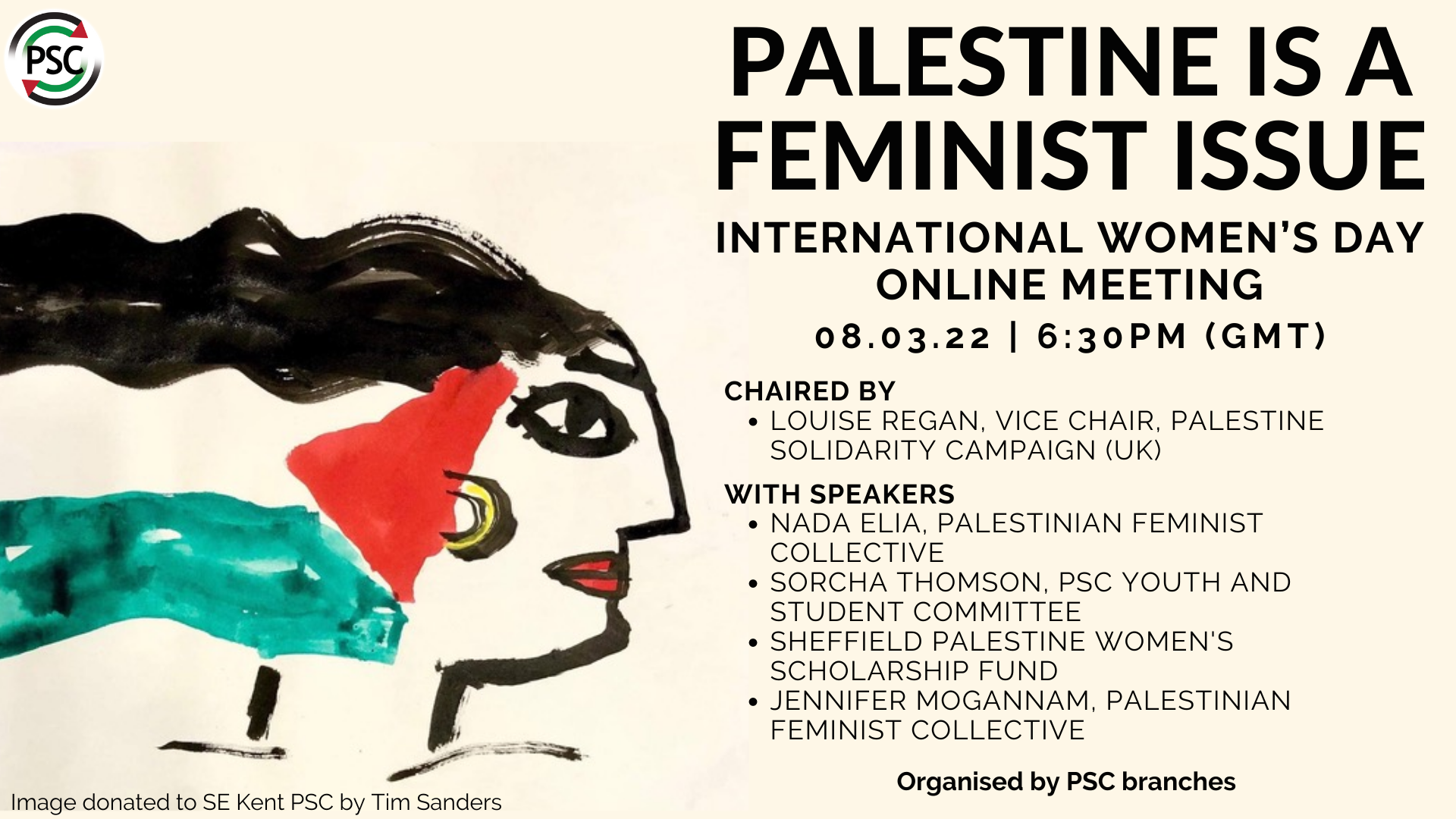
 Diane Langford